

How Do I Clean Up Ms File Explorer
How to find and delete unwanted files on your PC is a chore everyone thinks is going to take hours, when in fact it takes just a minute or ii. Only don't utilise Windows ten's File Explorer! The Windows Settings' Storage carte du jour wasdesigned to eliminate digital file clutter. It's the DIY kit to the more sophisticated WinDirStat tool (which we recommend if y'all want to dive deeper).
The need is only growing: Laptops with 128GB and 256GB SSDs are still the norm, merely photos and videos already hog a lot of infinite. If you're a fan of reboots of archetype games likeFlight Simulator, you need to know that they can take up to 150GB of storage, just by their lonesome. Here's how to take back some of that space.
 Mark Hachman / IDG
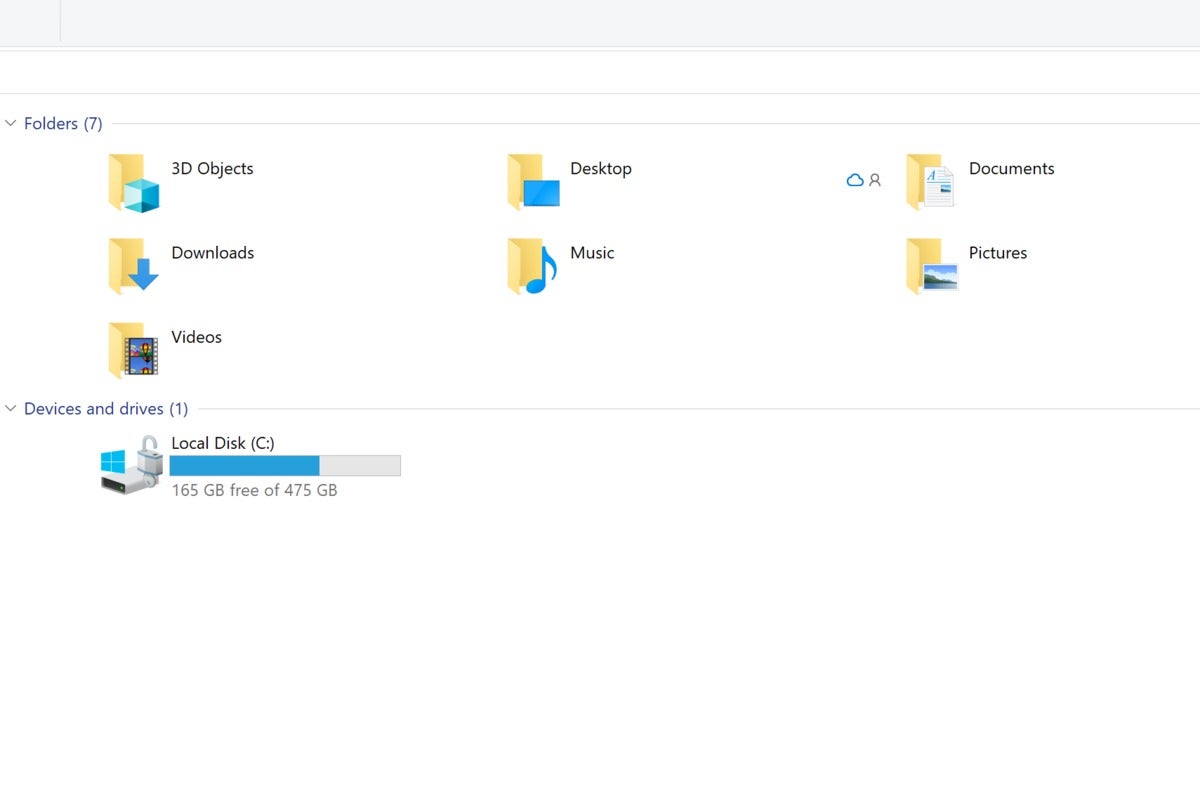
 You tin utilise Windows 10'due south traditional File Explorer to discover massive files that you want to delete, but if you exercise and then, yous'll spend fashion too much time on the task.
How to use Windows ten'southward Storage settings
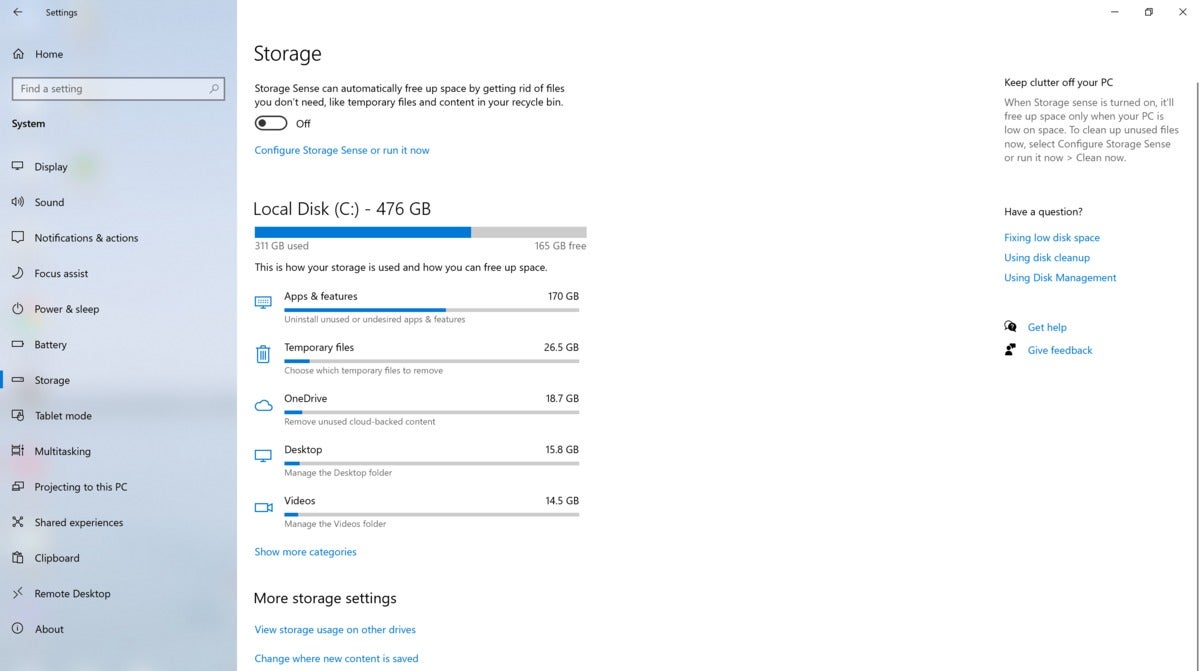
In the Windows x Settings card, get to Settings > System > Storage. At the top, you'll meet a toggle to turn Storage Sense off and on. We'll touch on that later.
 Marking Hachman / IDG
 This is Windows 10's Storage page, within the Settings menu.
In the center of the screen, you'll see your local hard disk drive (or disks) with an easy-to-read menu explaining how the storage is divvied upwardly within your PC. Note how the subtext points you to the task at mitt: "Uninstall unused or undesired apps & features," "Remove unused deject-backed content," and so on. Each category tells you how much of your PC's storage is tied up with apps, videos, and and then on.
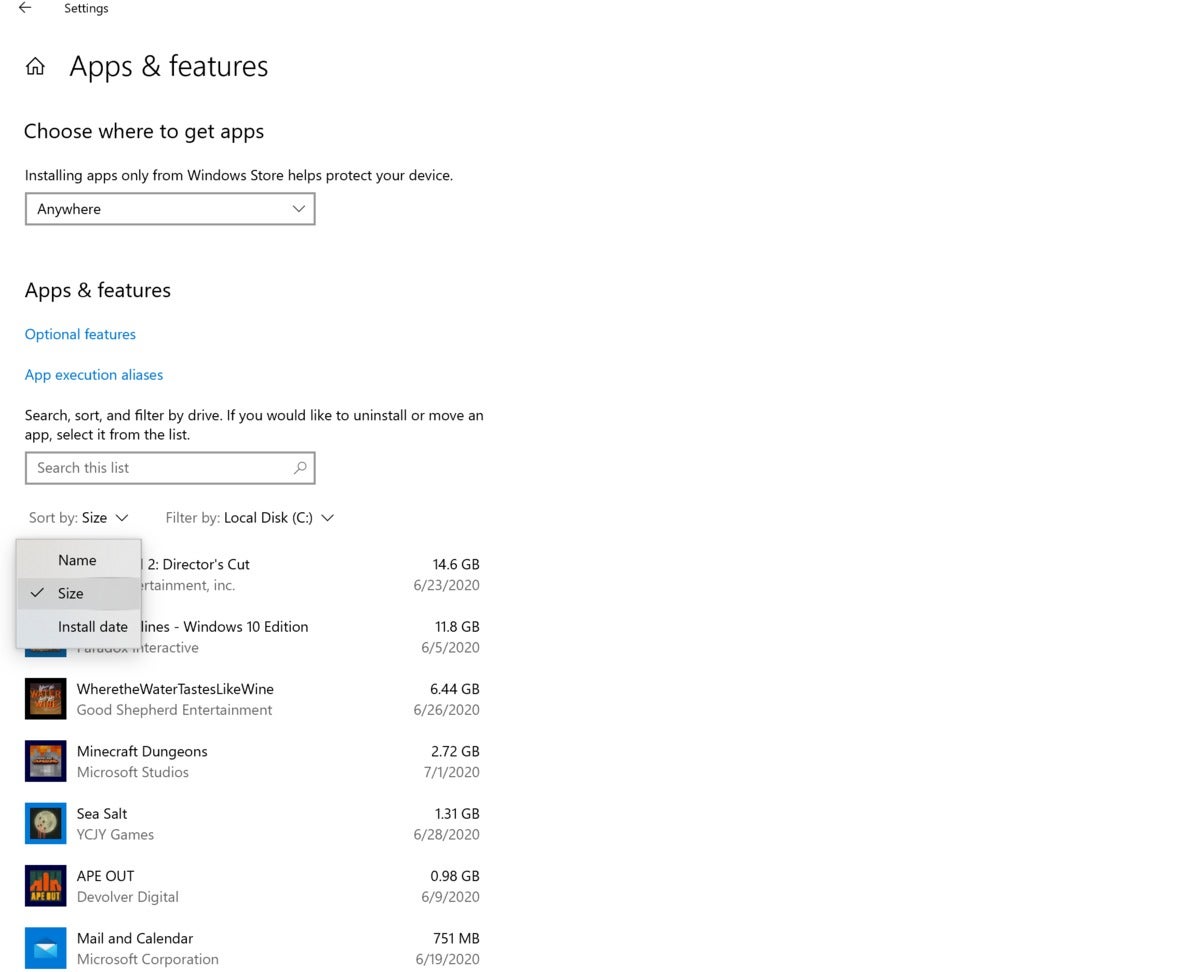
Apps traditionally gobble up the near space on a PC. You may find that a "small" game that you downloaded actually takes upwards a few gigabytes that y'all want back. Click the Apps carte, which will pb you lot to a page where Windows volition prove you the apps stored on your PC. Reorganize the list by file size to see which apps consume the near infinite, so click the app and select Uninstall to get rid of it. Note that some Windows native apps, such equally Photos, won't be uninstallable.
 Marker Hachman / IDG
 Apps typically consume gobs of gigabytes at a time, so look hither first for unwanted quondam apps that consume space. Filter by file size to brand the task easier.
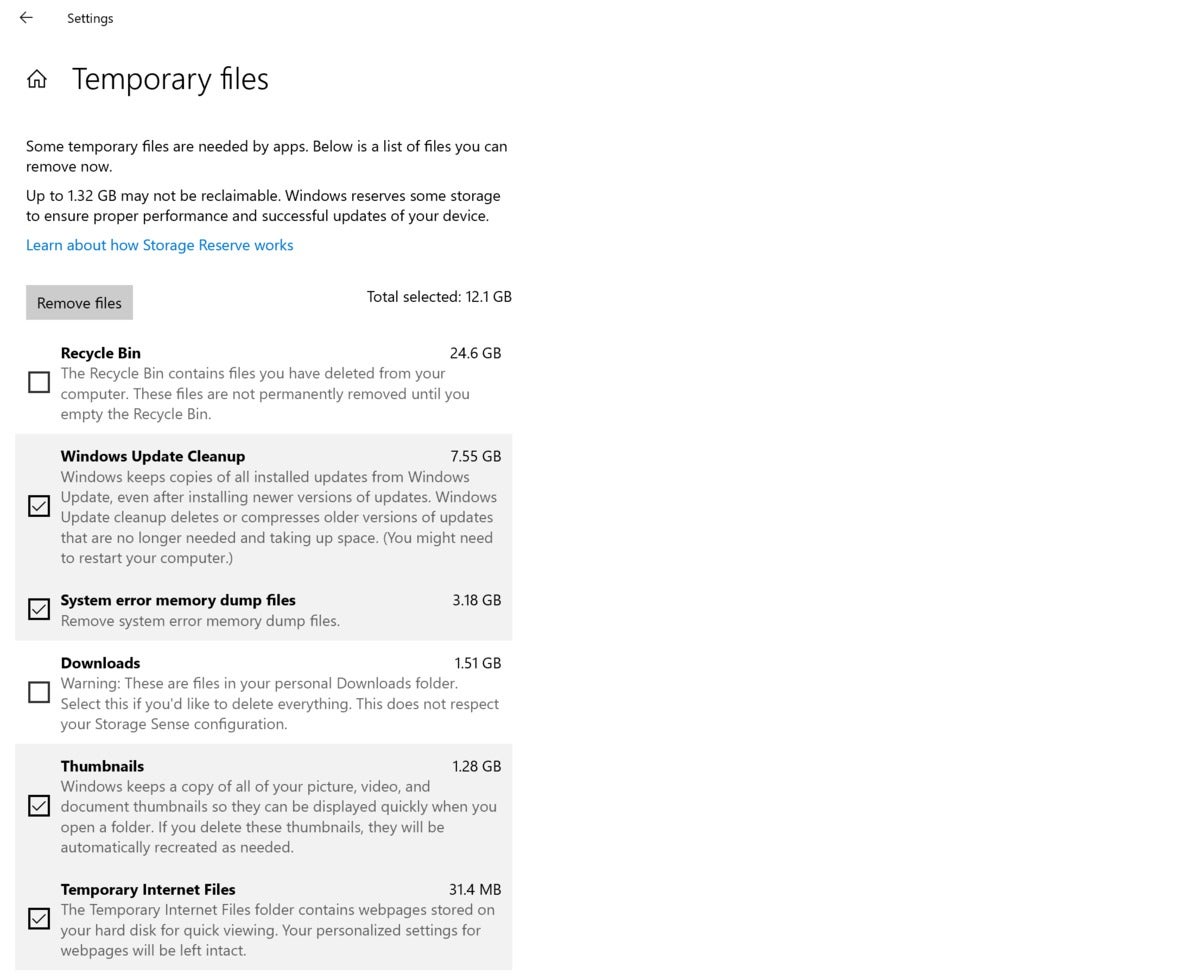
The "Temporary files" and "OneDrive subheadings" are typically the female parent lode of unwanted files. Clicking the Temporary files subheading opens upwards a wealth of files that even Windows thinks are unnecessary, from temporary Internet files to the Recycle bin. Click the Remove files button at the top to clear everything out.
 Mark Hachman / IDG
 The "temporary files" section commonly contains a number of files that can be safely deleted. At that place will exist some that say that y'all should keep older Windows Update files in case you need to scroll dorsum a flawed update, but this is rare.
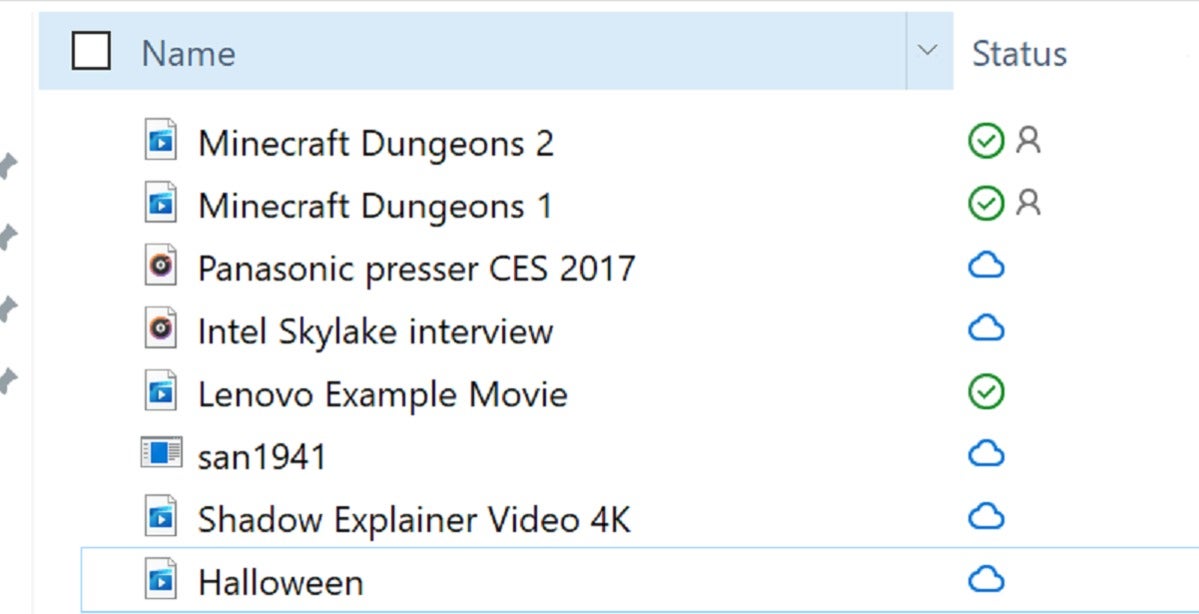
The OneDrive subheading is a bit more subjective. Past default, Microsoft'south OneDrive cloud-storage service backs upward your Documents, Pictures, and even your Desktop binder. But it keeps a placeholder—sort of a file bookmark on your local hard drive. Files that you've stored locally are maintained on your local hard drives, only a copy is as well kept on OneDrive (provided you have the space). Windows is smart plenty to know if such a copy exists, and can delete the local re-create, preserving the bookmark and maintaining the re-create in the cloud. (Annotation: don't expect this selection to but copy your hard drive into the cloud. It won't! Information technology will simply make clean up local files that have been previously backed up, which won't exist everything on your PC.)
 Mark Hachman / IDG
 In File Explorer, files stored on your local hard drive (on your PC) are shown with a green checkmark next to them. OneDrive files storedonly in the cloud have a deject icon. What Windows tin do is delete local files that are already backed up in the cloud, saving space.
A file that'due south backed up in OneDrive tin exist accessed by clicking it in File Explorer, just similar a local file. Before you tin can access it, however, it must be downloaded from OneDrive, which might be undesirable for those users with slow or unreliable Net connections. You can save infinite, sure, just it might not be worth the inconvenience.
Likewise, you may find that the remaining Storage categories aren't worth poring through as office of your digital cleanup routine. The Desktop and Videos folders probably concord content you desire to continue, and even selecting the Show more than categories link at the bottom simply opens up folders like Documents and Music that you may want to exit intact.
How to use Storage Sense, your digital housekeeper
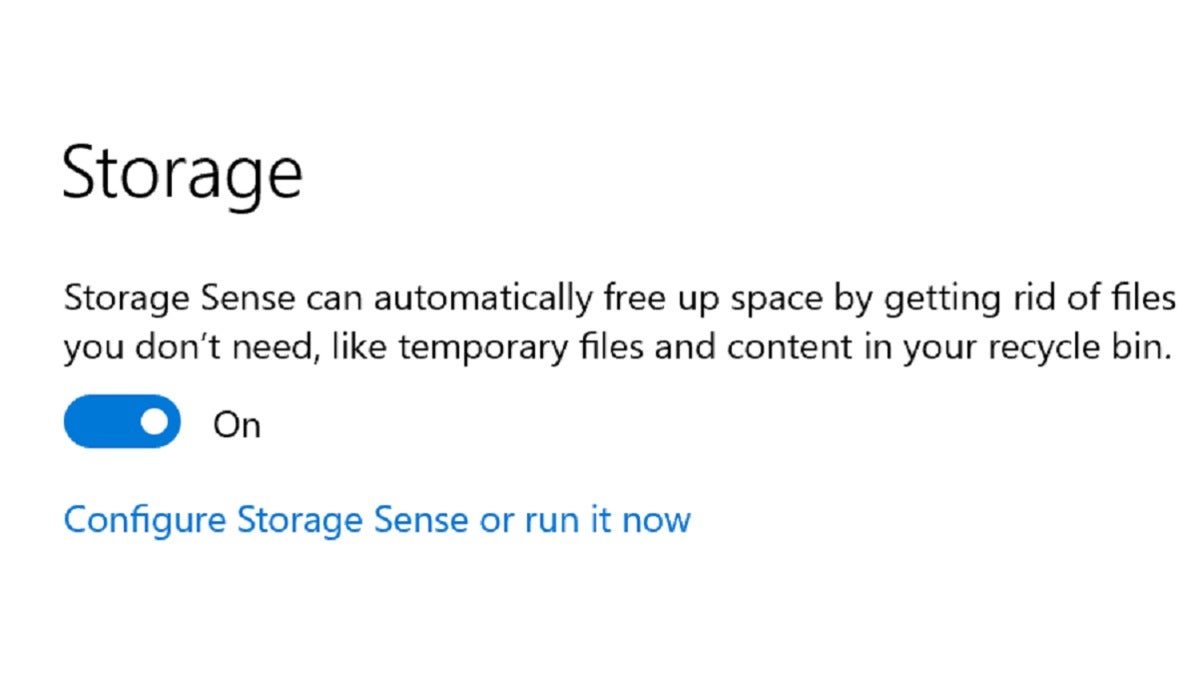
Remember how "Temporary files" was such an ideal location to find files that you can get rid of? Why not let Windows do it for you? That's the reasoning backside Storage Sense, the toggle at the top of the Settings' Storage page. Toggle information technology on, and information technology will automatically delete files in the Recycle Bin later on thirty days, and eliminate other temporary files, also.
 Marking Hachman / IDG
 Do yourself a favor, though, and open upwards the Storage Sense configuration/options page, which has been tweaked since the feature debuted early on in the Windows lifecycle. Our previous Storage Sense how-to is still in upshot, merely Windows has added controls to optionally delete files in your Downloads binder. I never want that to happen, and y'all might non want that to happen, either.
Notation that Storage Sense triggers only when you're low on deejay space. If you're downloading a massive game likeFlight Simulator, it might trip Windows up—in that location's too much empty space to run Storage Sense, but not enough to download the game. You can always go way down to the bottom of the Storage Sense configuration page and kick off Storage Sense manually.
The one key limitation I've noticed almost WIndows' own Storage settings is that they have blinders on where other app stores are concerned. If you've downloaded a few games via Steam, for example, Windows can't recognize how much space they have up.
 Brad Chacos/IDG
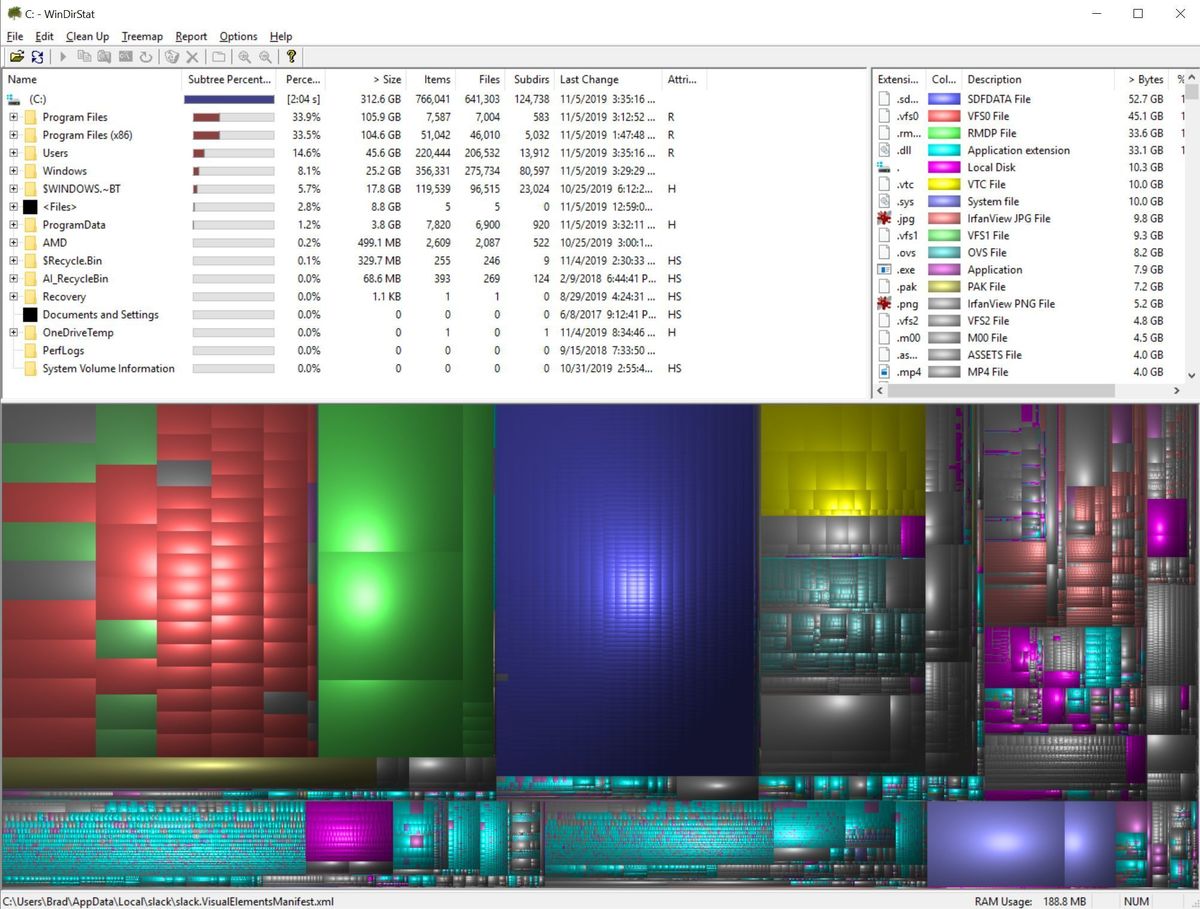
 WinDirStat is powerful, though intimidating.
As my colleague Brad Chacos explains, WinDirStat solves this problem past offering a top-down view of your hard bulldoze, with a graphical representation of the size and type of your files. Want to find out how much space is consumed past .MP4 video files? WinDirStat tin tell you. It presents this information to y'all in a File Explorer-like interface coupled with a graphical UI, then you may need to dig through and discover any hidden Steam games, for example, that may accept escaped your discover.
The combination of Windows' ain Storage settings and WinDirStat might not magically clean up your hard drive, but they'll help y'all make an informed decision on what to keep and what to delete. And if you lot still don't have enough storage space, maybe you'd like to refer to our roundup of all-time external hard drives to detect some more than?

Source: https://www.pcworld.com/article/393199/how-to-get-rid-of-old-files-and-clean-up-your-pc-with-windows-storage-settings.html
Posted by: morriswassfy.blogspot.com
0 Response to "How Do I Clean Up Ms File Explorer"
Post a Comment